Browse the library
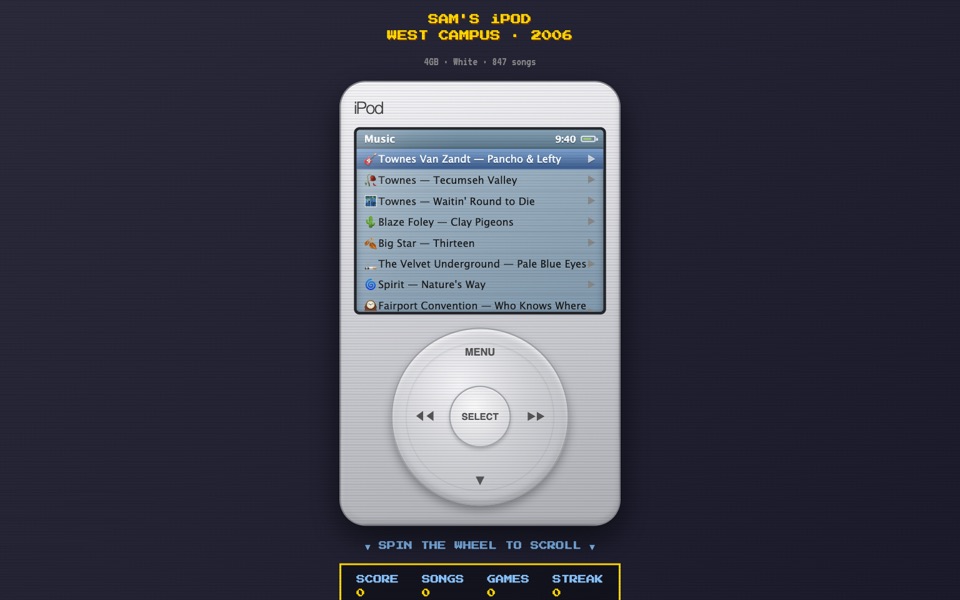
There are 847 songs. Moving through them is how the collection reveals its shape.
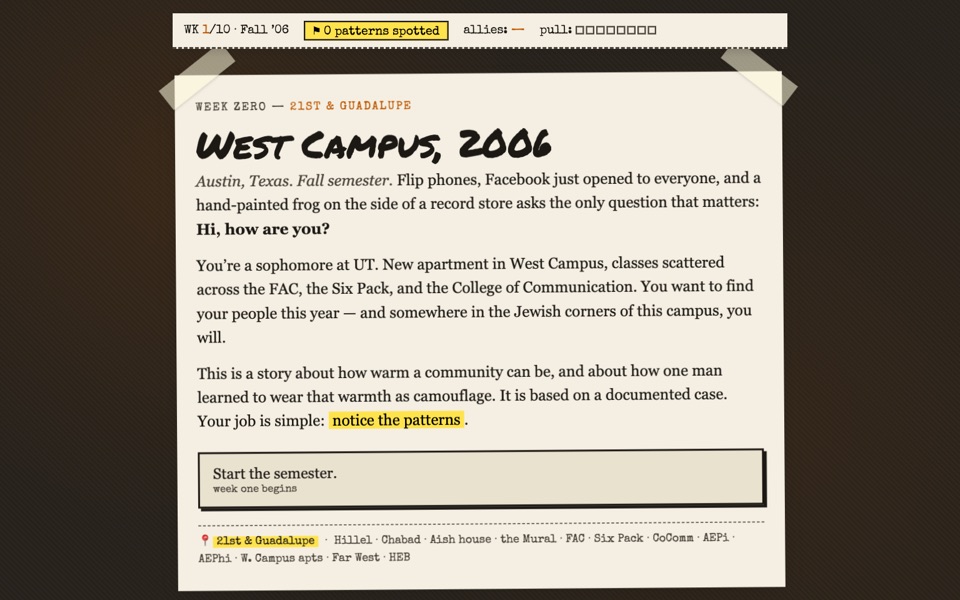
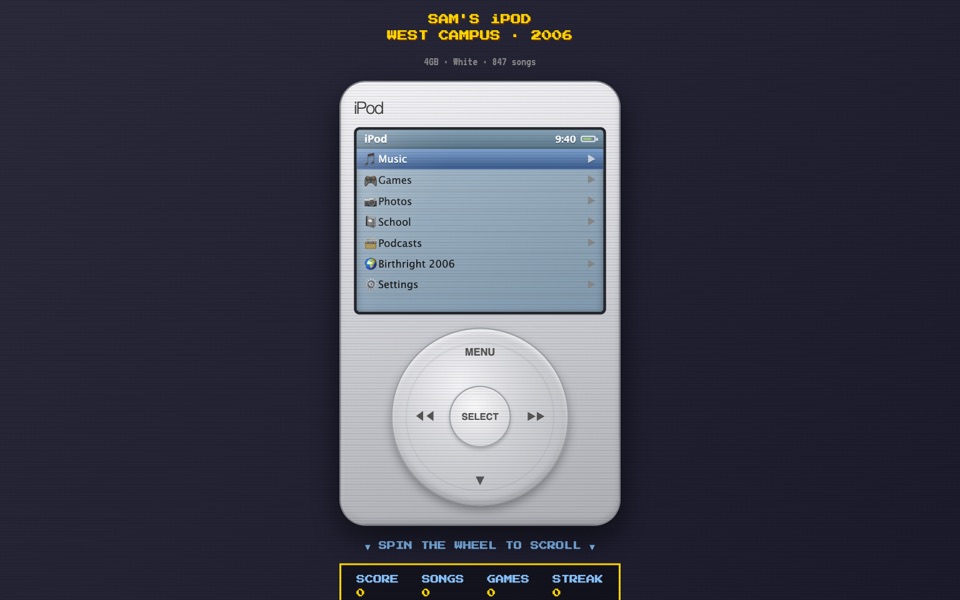
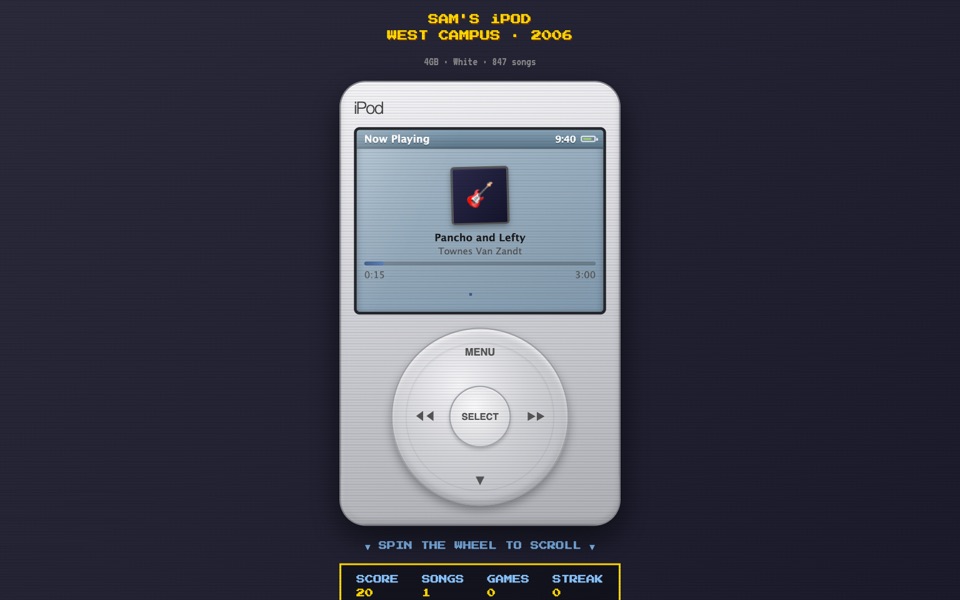
A 2006 iPod from West Campus turned into a browser game. Spin the wheel and see what one person’s music library remembers.

The game recreates a click-wheel iPod loaded with 847 songs in West Campus in 2006.
It is a personal artifact turned playable: somebody’s taste preserved as an interface you can touch.
The pleasure is discovery, not beating a score. Moving through the collection exposes the shape of a person one screen at a time.
The specificity is structural: it changes what the player can do, what each choice costs, and what the ending remembers.
There are 847 songs. Moving through them is how the collection reveals its shape.
The physical memory of a click wheel becomes part of play for anyone who carried one.
A music library is accidental autobiography. Taste accumulates into a portrait.
The interface does the rest. A click wheel is already a game controller; it just spent a few years pretending to be a music player.
The community begins with people who remember this interface in their thumb, especially anyone whose college years overlapped with the click-wheel era. West Campus in 2006 narrows that memory further. The cultural context is shared, while the library itself stays stubbornly personal.
The game does not need to simulate all of 2006. One authentic artifact can carry enough period detail to make the year legible from the inside.
This is the smallest world in the catalog: one device belonging to one person. It still passes the studio test because the collection records taste without explaining itself.
The game does not need to simulate all of 2006. One authentic artifact carries enough period detail to make the year legible from the inside.
No. Recognition is part of the fun if you do; the click wheel explains itself quickly.
Spin through the library and see what loads. The artifact is the game.
In your browser on the game’s hosted page.
Nothing. Open it and spin the wheel.
This game demonstrates the studio’s central claim: a real place, practice, community, or text contains better game mechanics than a broad theme pasted on later.
Follow the mechanics into another place, practice, memory, or shared text.
The playable build is free. If this makes you think of a world only your people would recognize, that may be the next game.