Walk without a map
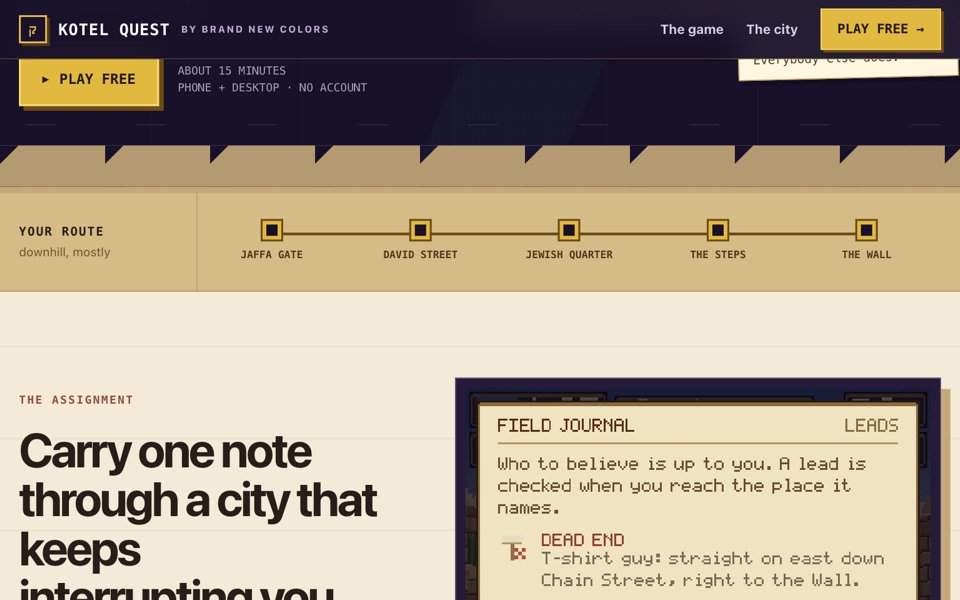
Orientation comes from what surrounds you rather than a route line announcing the right answer.
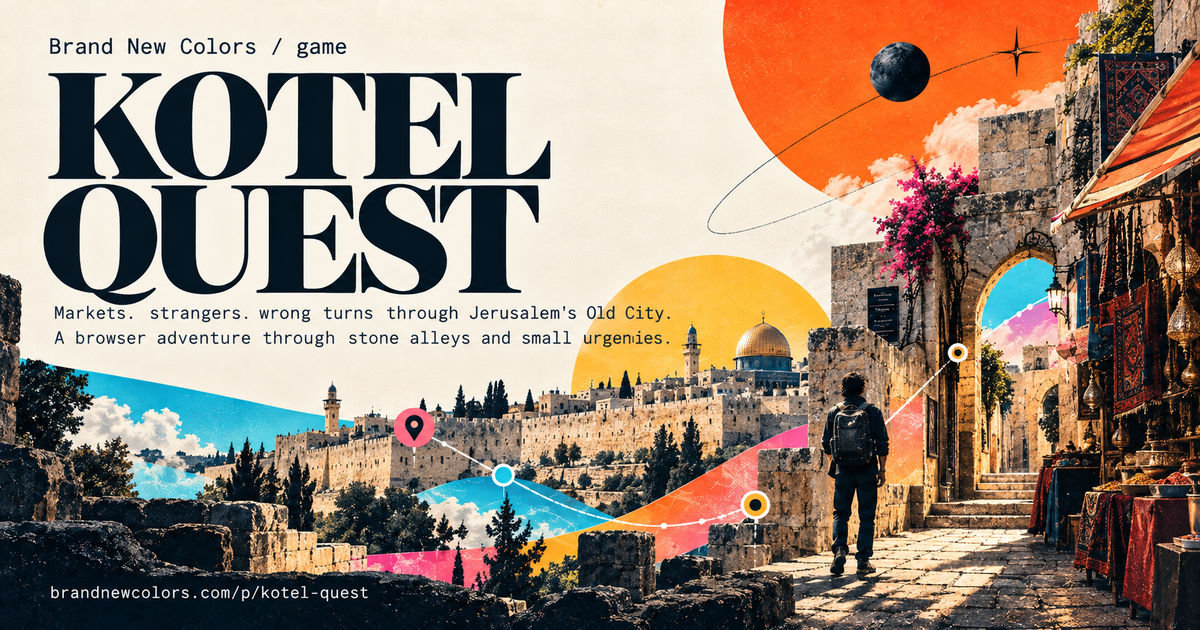
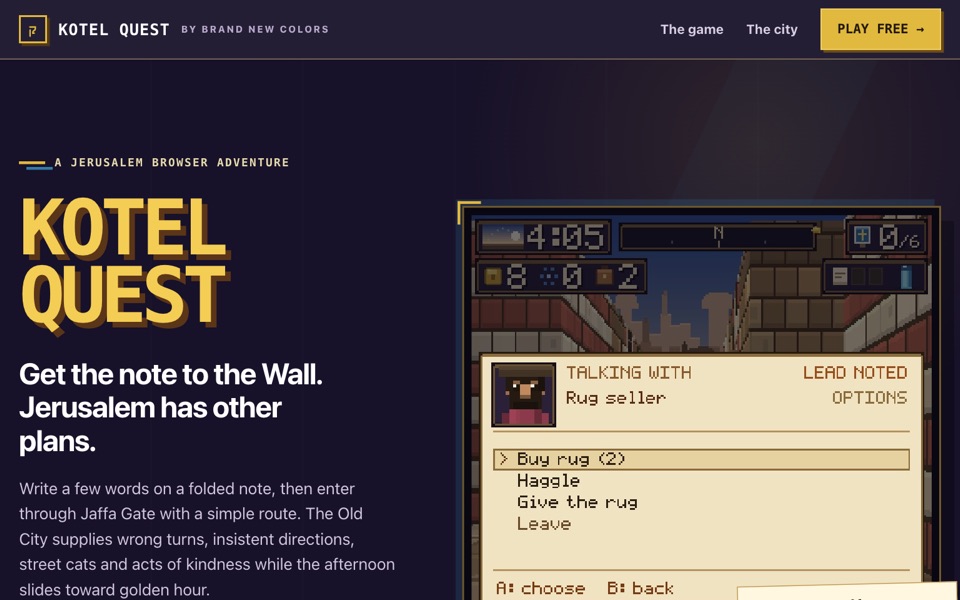
Wander Jerusalem’s Old City without a map. Wrong turns are the mechanic; the Western Wall is the destination.

The route runs through shuk stalls and past strangers, takes wrong turns on purpose, and keeps company with street cats.
The name gives away the destination: the Kotel, the Western Wall. The game ends there—somewhere very quiet.
The shuk, cats, and people are not obstacles between player and goal. They are why the route is worth taking.
The specificity is structural: it changes what the player can do, what each choice costs, and what the ending remembers.
Orientation comes from what surrounds you rather than a route line announcing the right answer.
Encounters give the walk texture. A wrong turn is allowed to become the interesting turn.
The destination gives the wandering direction; the atmosphere gives the ending weight.
Some places hand a game its structure. The Old City’s narrow streets make wandering feel natural, and the Kotel gives that wandering a destination with a different emotional register from the market streets around it.
The design work is mostly restraint: letting the wrong turns be the game, and letting the ending stay quiet.
The community includes people who know Jerusalem through daily life, family, study, pilgrimage, or memory. Their relationship to the Old City is not interchangeable, which is exactly why generic “ancient Jerusalem” atmosphere would be too blunt.
The Old City’s narrow streets make wandering natural, and the Kotel gives that wandering a destination with a different emotional register.
Someone who knows these streets brings muscle memory; a newcomer gets enough local texture to understand why wandering belongs here.
No. Familiar streets add recognition; the route works for a first visit too.
A wandering browser adventure. Getting lost is part of the structure.
In your browser at kotel.quest.
Nothing. Open the game and start walking.
This game demonstrates the studio’s central claim: a real place, practice, community, or text contains better game mechanics than a broad theme pasted on later.
Follow the mechanics into another place, practice, memory, or shared text.
The playable build is free. If this makes you think of a world only your people would recognize, that may be the next game.